Liposuction
Considering Liposuction surgery?
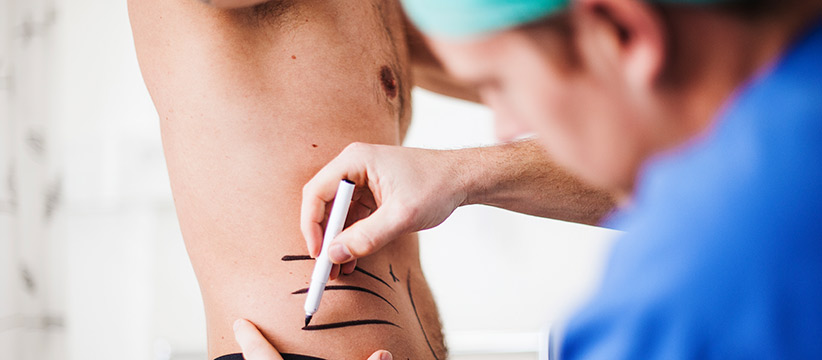
Liposuction is a technique originally developed in France. During the surgery, fatty deposits are removed from your body using suction. The most commonly treated areas are:
- The neck
- For excess tissue in men and women in the breast and chest area
- The tummy and flanks
- The thighs
- The knee and lower leg areas
There are a number of different types of liposuction. When liposuction was first developed, the Dry Technique was favoured. In this, no fluid was placed in the fatty tissue, which resulted in more bruising and swelling following surgery. Since then, surgeons have developed more modern techniques using more and more fluid. This helped dissolve the fatty tissue and reduce the amount of bruising and swelling after your surgery, and improves the efficiency of fat removal. These include:
Tumescent
The advantage of tumescent liposuction is that fluid contains local anaesthetic and adrenaline, reducing pain and bruising during and after the procedure. In most cases, tumescent liposuction is performed under local anaesthetic.
Vaser
In this procedure, ultra-sound energy is used to help dissolve the fatty cells which are then removed via liposuction.
Power-assisted
A vibrating piposuction cannula is used to draw up the fatty cells and make them easier to remove.
Water-assisted
Water jets are again used to dissolve the fatty tissue and make it easier to remove.
Smart
Ultrasound energy is used to help disrupt the fatty tissue.
The most important thing to consider with liposuction is that each technique depends on the surgeon performing them. The most crucial factor is that the surgeon is experienced in liposuction and removes the correct amount of fat from the correct area. The different types of liposuction are essentially different types of equipment the surgeon can use to achieve this aim.
How will it impact your life?
Liposuction surgery can help to extinguish a problem area which may be causing you to become very self conscious, impacting your confidence. With the advancements in technologies for this type of surgery, we can help you to gain back your confidence.
Is Liposuction surgery right for you?
You will have a pre-operative consultation with your surgeon to discuss the areas which concern you. Your surgeon will explain the pros and cons of surgery and discuss the results you are likely to obtain.
It is important to remember that liposuction is not a remedy for being overweight. It should not generally be performed on people with a body mass index (BMI) of over 30. You can assess your BMI by dividing your weight in kilograms over your height in centimetres squared.
Surgery is normally performed under local anaesthetic (milder sedation). This allows your surgeon to move you around slightly and see the areas which concern you from different angles.
Your surgeon will normally access the fatty tissue in each area by 2-3 incisions. This allows them to remove it in an even way from different angles. It’s important to note that these incisions are not usually stitched. This means that some of the fluid injected into the area may leak out in the hours following surgery. This is normal and will serve to reduce swelling in the long-term.
After your surgery and beyond…
At the end of the procedure you are normally fitted with a compression garment which gently supports the areas treated and reduces swelling and bruising. We recommend that you avoid any strenuous activities for the week following treatment. After this, we will book a follow up appointment 1 week after your surgery to check that you are healing well.
Some swelling and bruising is likely to remain for some weeks. We will see you again 6 weeks after your operation to take photographs, but if you have any questions or queries in between, we will be more than happy to see you before this time. It is important to remember that some swelling will still be present at this stage but will settle with time.
Overall, liposuction is a very good technique for removing relatively small areas of fatty tissue, providing your BMI is under 30. When your surgeon removes a number of these fat cells, you are likely to have a reduction in this area. It is important to remember that, if you do put on weight again, the remaining fat cells will swell again. It is therefore best to maintain a steady and healthy weight after liposuction in order to prevent the areas of excess fat recurring.
The next step
We always encourage people to do as much research as they can when considering cosmetic surgery, so for more information on liposuction surgery:
- Read our online Trust Pilot and Real Self reviews
- Watch our surgeon videos covering frequently asked questions
- See before and after photographs in our extensive gallery to compare and contrast results with your body shape
- Get in touch and we will email you information on our surgeons and clinics and how to book a no obligation consultation.
Aurora is now part of The Private Clinic, a nationwide group of clinics with over 35 years of experience specialising in Cosmetic Surgery and Skin and a Trust Pilot 5 star rating. For comprehensive information, before and after photos and costs on Liposuction procedures click here
Our clinics are located in Birmingham, Bristol, Buckinghamshire, Glasgow, London Harley Street, Leeds, Manchester and Northampton.